Start With the Category, Not the Streamer
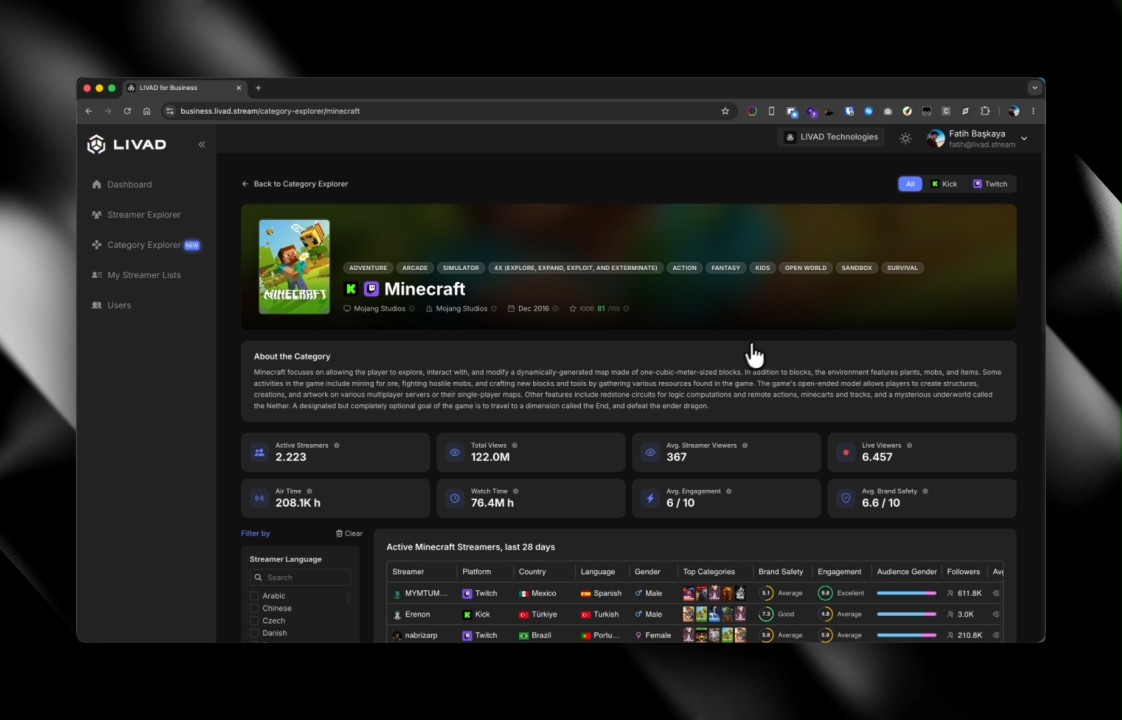
Almost every live streaming campaign brief I see starts the same way: a list of streamer names. Someone on the marketing team watched a few streams, recognized a handle, and now that handle is the plan.
I understand the instinct. Streamers are the visible layer. They have faces, follower counts, and clips you can send to your boss. But picking creators first means you have decided who is delivering the message before you have decided who is receiving it, and that is a strange order to work in.
The better question is where your audience already spends time. What games, what genres, what communities. Answer that, and the streamer list writes itself.
That is the question Category Explorer was built to answer, and it is the product I have spent the most time on at LIVAD this year.
Category-first discovery
Category Explorer covers more than 11,000 categories across platforms. You can filter by platform, total views, active streamers, genre, language, and country, then narrow until you are looking at the cultural space you actually care about instead of the whole firehose.
The data grid is fully customizable. Rearrange columns, hide the metrics you never look at, and save filter presets so you are not rebuilding the same view every Monday. Small thing, but it was one of the most requested features from our campaign team, and it turned out to be the difference between a tool people open once and a tool people keep open.
What a category actually tells you
Filtering is only half of it. Click into any category and you get the full picture:
- Active streamers in the last 28 days
- Audience demographics
- Streamer countries
- Sponsorship moments pulled from real streams
- The rest of the metrics that matter when you are building a campaign plan
The sponsorship moments part is my favorite. Seeing which brands have already shown up in a category, and how, tells you more about fit than any media kit will. You find out whether a space is saturated, whether your competitors got there first, and what an integration in that community actually looks like when it goes well.
Why this ordering matters
Live streaming is not one audience. It is thousands of micro-communities that happen to share a few platforms. A simulation racing category and a variety chat category can sit next to each other in a dashboard and have almost nothing in common in terms of who is watching, why, or what they will tolerate from a sponsor.
When you start from streamers, you are guessing which of those communities you have landed in. When you start from categories, you pick the community deliberately and then choose creators who are native to it.
That is the entire idea. Category Explorer makes those micro-communities addressable, and once they are addressable, campaign planning stops being a taste exercise and starts being a targeting one.
If you plan live streaming campaigns and you are still building your briefs streamer-first, try inverting it once. The list you end up with will look different, and in my experience it performs differently too.