Picking Streamers Shouldn't Be Guesswork
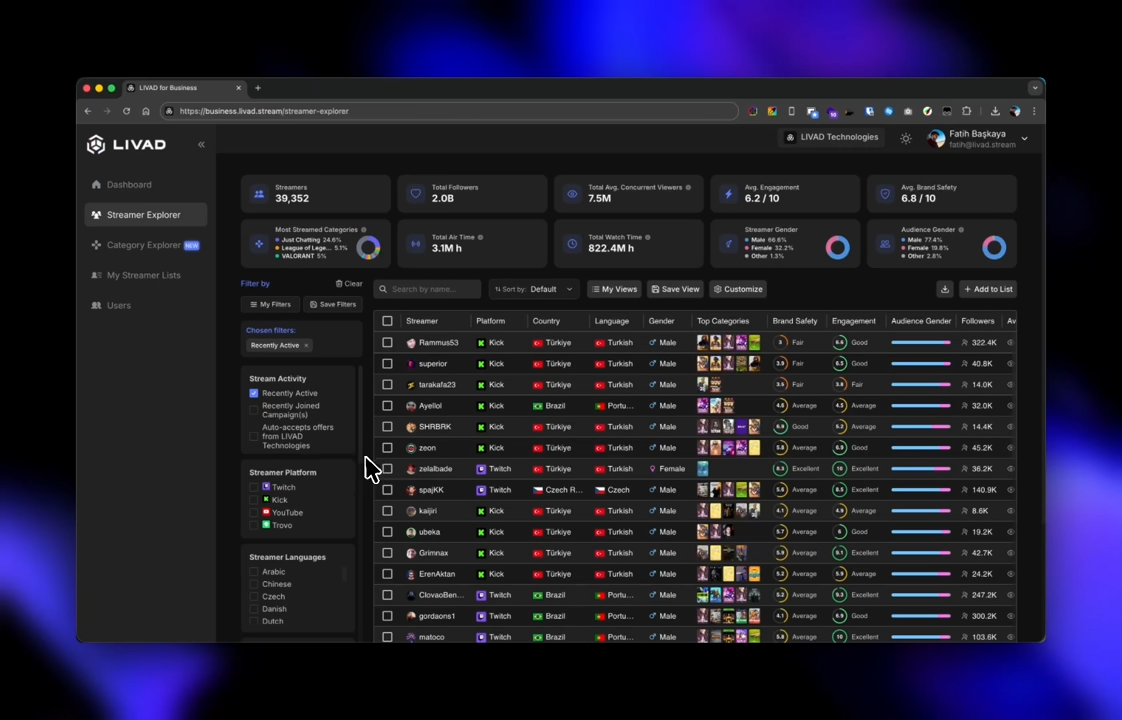
Ask a brand how they picked the streamers for their last campaign and the honest answer is usually some version of scrolling.
Open a platform, browse profiles, check follower counts, watch a few minutes of a stream, form an impression. Repeat until you have enough names to fill a slide. Somewhere in that process a real decision gets made about who your budget goes to, and it gets made on vibes.
That is the workflow Streamer Explorer replaces.
Filters instead of scrolling
You set what you actually need: language, category, audience size, engagement. You get back the streamers who match. Not the ones who happened to surface while you were browsing, not the ones someone on the team already recognized. The ones who fit the target you defined.
This is the same principle behind Category Explorer, which I wrote about separately. Decide who you are trying to reach first, then let the tool tell you who reaches them. The order matters more than people expect.
Lists that do something
Finding streamers is the easy part. The part that used to break down was everything after.
In Streamer Explorer you build a list, and that list is live. Every streamer on it carries real-time stats, and you can see the list average, which is the number that tells you whether your selection actually holds together or whether one big name is carrying an otherwise weak roster.
When the list looks right, you launch the campaign directly from it. No export, no handoff, no separate brief that someone retypes into another system.
While the campaign runs
Once you are live, the same view keeps working:
- Track performance per streamer
- Swap out streamers who are not delivering
- Monitor brand safety scores
- Review screenshots from actual live placements
That last one matters more than it sounds. Live streaming placements happen in a moment and then they are gone. Being able to see what your brand looked like on screen, in context, is the difference between reporting a number and knowing what you bought.
One flow
Discovery, list building, launch, optimization, proof. Those were five different tools and three different spreadsheets for most teams. Now they are one flow.
If you are a brand trying to reach gaming audiences on live streams, this is where it starts.